Factories and warehouses need layered fire protection because no single system covers every risk. A sound design combines prevention, detection and alarm, automatic suppression, manual firefighting equipment and a reliable water supply, with extra protection for special hazards. The right mix depends on what you make, what you store and how you store it.
Each layer backs up the others. If detection fails to catch a fire early, sprinklers can still act. If a small fire is spotted first, a trained worker with an extinguisher may stop it before anything else is needed.
Why industrial sites carry more fire risk
Industrial buildings combine large quantities of fuel with many ways to ignite it. Common risks include:
- Stored goods at height. Racks of packaged goods give fire fuel, airflow and a vertical path.
- Flammable liquids and gases. Solvents, fuels, paints and process chemicals can spread a fire quickly.
- Combustible dust. Fine dust from wood, flour, plastics and other materials can burn fast and, under the wrong conditions, explode.
- Hot work. Welding and cutting are a classic ignition source, especially near combustible materials.
- Electrical equipment. Overloaded panels, cable trays and motors can start fires out of sight.
- Machinery. Friction, overheating and failed bearings can ignite oil or dust.
- Battery charging. Forklift and equipment charging areas bring their own fire and gas hazards.
- Empty hours. A fire at night or during a holiday may grow for a long time before anyone notices.
The large, open floors of many factories also let heat and smoke travel a long way, which makes early detection and containment harder.
The layers of factory fire protection
Layer 1: Prevention and separation
The cheapest fire is one that never starts. Good housekeeping, dust control, a hot work permit procedure and electrical inspections all reduce ignition risk. Fire-rated walls and doors divide the site into compartments, so that a fire in one area does not take the whole plant. Keep flammable materials in separate, suitable stores.
Layer 2: Detection and alarm
Early warning gives people time to leave and to act. The detector has to suit the environment:
- Beam or aspirating detection can work well under high roofs
- Heat detection suits areas with dust, steam or fumes
- Flame detection can suit flammable liquid areas
Addressable systems are often preferred on large sites because the panel shows the exact device in alarm. Our comparison of conventional and addressable fire alarm systems explains the difference. Alarm systems are commonly designed to NFPA 72 or EN 54.
Layer 3: Automatic suppression
Sprinklers are the backbone of protection for most factories, because they work without anyone present and act directly on the fire. Wet systems suit most halls, while high-piled storage often needs a dedicated storage design. See our sprinkler systems guide for the options under NFPA 13.
Layer 4: Manual firefighting
Workers and responding fire crews need equipment they can reach. That usually means portable extinguishers selected for each area under NFPA 10, plus hose cabinets and standpipes designed to NFPA 14, and outdoor hydrants on larger sites.
Layer 5: Water supply and pumps
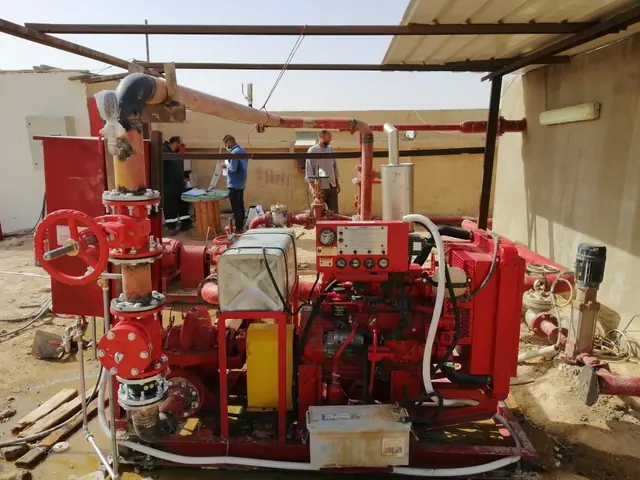
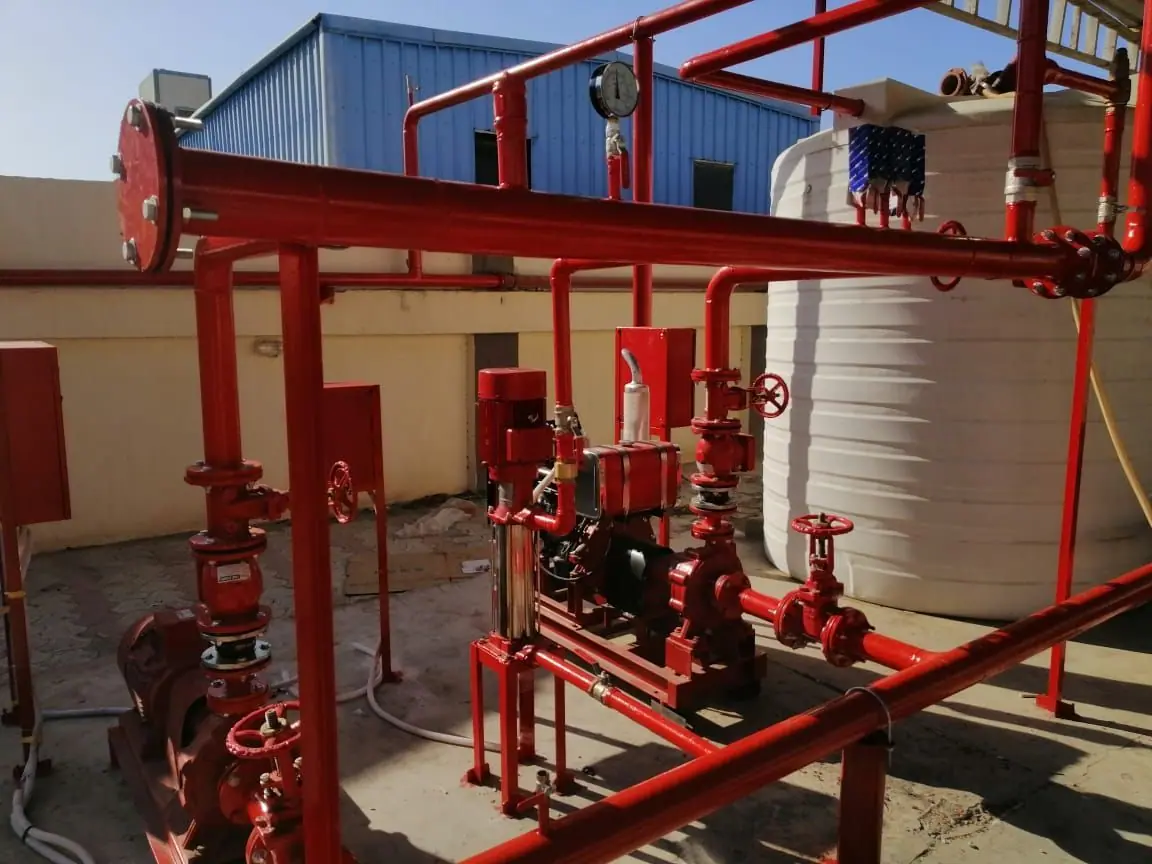
Sprinklers and hoses depend on a dedicated fire water supply. This normally means a tank and a pump set installed to NFPA 20, with the capacity, flow and pressure taken from hydraulic calculations. Large sites may have a long network, so losses along the pipe matter. A factory should also consider what happens if power fails, which is why many projects include a standby pump.
Special hazard protection
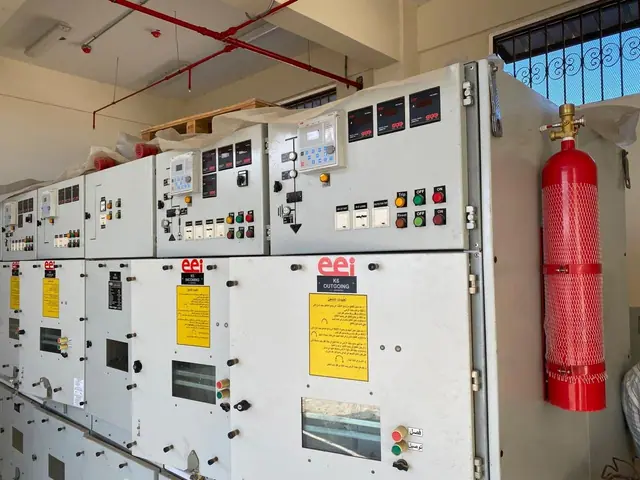
Some areas need protection beyond sprinklers. Flammable liquid risks may call for foam-based systems. Control rooms and electrical rooms may be better served by gas suppression under NFPA 2001 or NFPA 12.
Typical protection by area
The table is a starting point only. Your actual scope should follow a risk assessment and the approved design.
| Area | Main risk | Typical protection |
|---|---|---|
| Production halls | Machinery, electrical faults, mixed combustibles | Sprinklers, suitable detection, hose cabinets, extinguishers |
| Raw material and finished goods storage | High fuel load at height | Storage sprinkler design, beam or aspirating detection, hydrants |
| Flammable liquid stores | Fast-spreading liquid fires | Separation, foam-based protection, suitable extinguishers |
| Electrical rooms | Cables and switchgear | Detection, gas suppression where justified, CO2 extinguishers |
| Generator and boiler rooms | Fuel and high temperatures | Heat detection, automatic suppression, extinguishers |
| Loading docks | Packaging, vehicles, forklifts | Sprinklers, hose cabinets, extinguishers |
| Offices and canteens | Ordinary combustibles, people | Smoke detection, sprinklers, extinguishers, clear exits |
Warehouse fire protection: what changes
Warehouses deserve special attention because fire behavior depends so heavily on storage. Before design, establish the following:
- What is stored, including its packaging and any plastics
- The maximum storage height
- Whether goods are on racks, pallets or block stacked
- Aisle widths, and whether they will change
A system designed for cardboard boxes at one height may not control a fire in plastics stored higher. Treat any change in stock or racking as a reason to review the protection.
Common mistakes in factories
- Designing for today’s layout, then adding machines and racks without review
- Using standard smoke detectors in dusty or steamy areas, which leads to false alarms and disabled zones
- Sharing fire water with process use without securing a protected reserve
- Keeping goods stacked against sprinkler heads, hose cabinets or exits
- Treating fire drills and staff training as optional
- Neglecting inspection and testing under NFPA 25
Where to start
Start with a site survey and risk assessment, then design the layers together so they work as one system. Existing factories can often upgrade in phases, beginning with the largest gaps. Check the local approval path as well, and our article on Civil Defense requirements in Egypt explains the general process. Exact requirements depend on the approved design and the local Civil Defense authority.
Protect your factory or warehouse
ECCO designs, supplies and installs fire fighting and fire alarm systems for industrial sites across Egypt, and we are agents for SUZLER pumps, Albtran fire extinguishers and ASSS NEVERFIRE fire alarm systems. Contact our engineers to arrange a review of your site.
Frequently asked questions
What fire protection does a factory need?
Most factories need detection and alarm, automatic suppression such as sprinklers, manual firefighting equipment and a reliable water supply. Special hazards may need their own protection. The final scope depends on a risk assessment and the approved design.
Are smoke detectors suitable for every part of a factory?
No. High roofs, dust and steam can make standard point detectors unreliable. Beam, aspirating, heat or flame detection may suit those areas better, depending on the conditions.
Does changing what we store affect the fire system?
It can. Sprinkler design depends on the stored material, its height and its arrangement. Storing plastics, or stacking higher than planned, can leave a system unable to control a fire, so have changes reviewed first.
Can fire protection be upgraded while a factory keeps running?
Often, yes. Work can usually be planned in phases around production, subject to the site and to what the authority accepts. A survey at the start helps set the order of work.