A gas suppression system puts out a fire by filling a protected room or enclosure with gas instead of water. Clean agents, covered by NFPA 2001, are used where water would cause as much damage as the fire, such as server rooms and control rooms. Carbon dioxide, covered by NFPA 12, is a strong option for industrial hazards, but it is dangerous to people, so it is generally kept to spaces that are normally unoccupied.
The choice between them comes down to who is in the space, what you are protecting, and how well the room can be sealed.
How a gas suppression system works
Whichever gas is used, the sequence is broadly the same:
- Detection. Smoke or heat detectors watch the protected space. They are often arranged so that two separate detectors must confirm the fire, which reduces accidental discharges.
- Pre-discharge warning. Sounders and warning lights tell people to leave, and a time delay gives them a chance to do so.
- Abort or manual release. An abort switch can hold the discharge during a false alarm, while a manual release lets trained staff trigger the system.
- Shutdowns. The release panel can stop air handling units, close dampers and shut down equipment, so that the gas is not diluted or carried away.
- Discharge. Cylinder valves open and the gas travels through pipework to nozzles in the protected space.
- Hold. The concentration is maintained long enough for the fire to go out and hot surfaces to cool.
The detection and control side is usually designed to NFPA 72 or EN 54, depending on the project. You can see the alarm and release control equipment we supply on our products page.
Clean agent systems (NFPA 2001)
Clean agents leave no water, powder or foam behind, so equipment and records are spared the secondary damage that other extinguishing methods can cause. They fall into two families.
Halocarbon agents
Agents such as HFC-227ea and FK-5-1-12 are stored as liquids in cylinders pressurized with nitrogen. They act mainly by absorbing heat from the flame. Their main advantage is compact storage, since they need fewer cylinders than inert gases for the same room.
HFC-227ea has a high global warming potential, and HFCs are being phased down in many markets. It is worth asking your designer about long-term availability of refills for the agent you select.
Inert gas agents
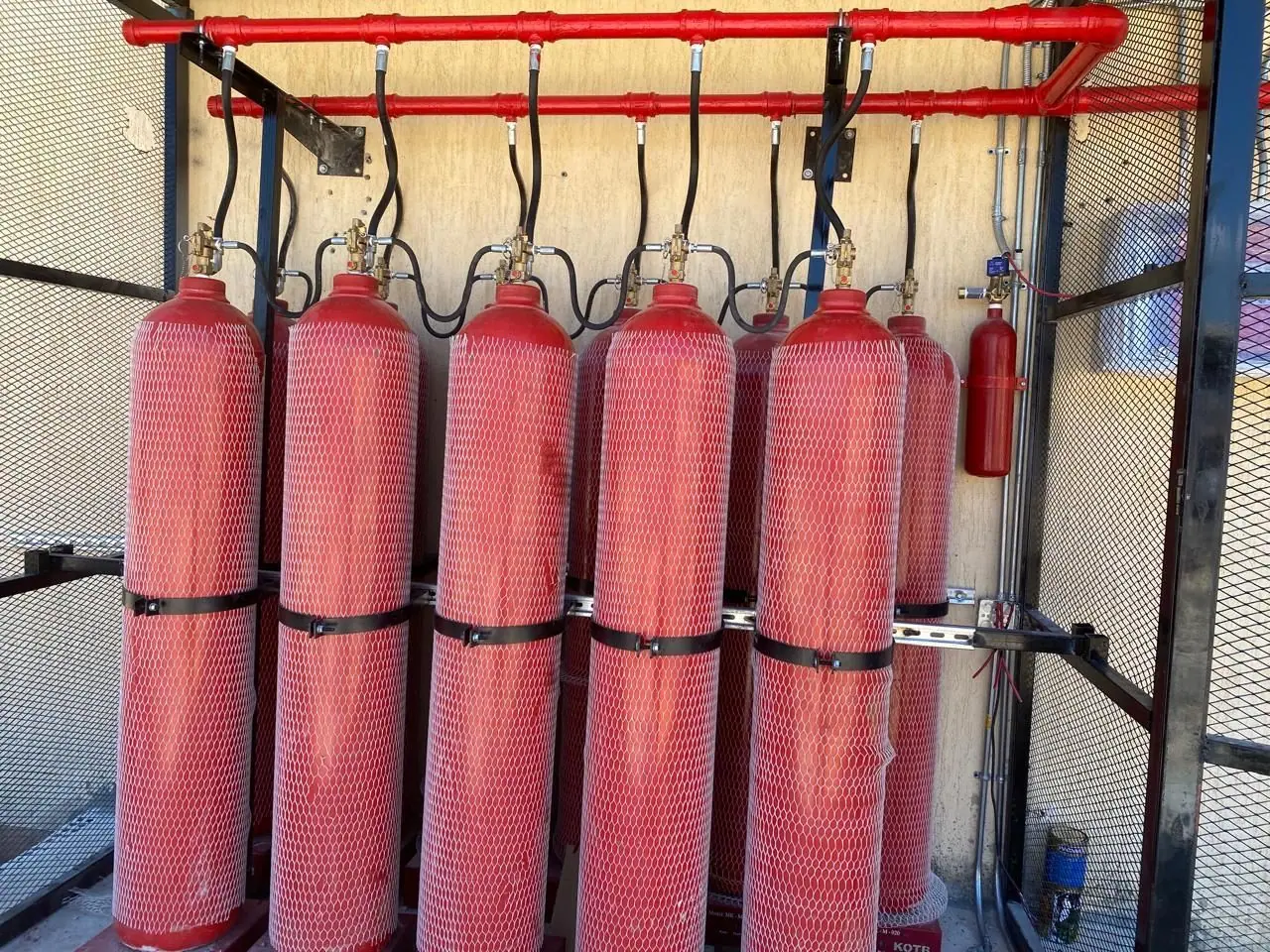
Agents such as IG-541, IG-55 and IG-100 are made from gases found in air, such as nitrogen and argon. They work by lowering the oxygen level in the room to a point that will not sustain burning, while the design keeps within limits set for people’s exposure. They are stored as compressed gas at high pressure, which means more cylinders and more floor space. Rooms protected this way usually need pressure relief vents to handle the rapid inflow of gas.
CO2 suppression systems (NFPA 12)
Carbon dioxide extinguishes a fire mainly by displacing oxygen, with some cooling effect. It can be applied in two ways: total flooding, which fills an enclosure, or local application, which discharges directly onto a specific hazard.
CO2 at extinguishing concentrations can kill. That one fact drives the design of every CO2 system, and safeguards commonly include:
- Lock-out valves that prevent discharge while people are working inside
- Pre-discharge alarms with an adequate time delay
- Clear warning signs at entrances and around the hazard
- Attention to low-lying spaces, because CO2 is heavier than air and can collect in pits and basements
- Staff training and a safe re-entry procedure with ventilation after discharge
CO2 is also unsuitable for some materials, including reactive metals and chemicals that supply their own oxygen.
Comparing the three options
| Factor | Halocarbon clean agent | Inert gas clean agent | CO2 |
|---|---|---|---|
| Standard | NFPA 2001 | NFPA 2001 | NFPA 12 |
| How it works | Mainly absorbs heat | Lowers oxygen level | Displaces oxygen, some cooling |
| Storage | Liquid, compact | High-pressure gas, more cylinders | High-pressure cylinders or low-pressure tanks |
| Occupied spaces | Can be designed for them | Can be designed for them | Generally avoided without strict safeguards |
| Typical use | Server rooms, control rooms | Server rooms, archives, telecom rooms | Generator enclosures, machinery, industrial hazards |
Where gas suppression is used
Clean agents suit spaces with high-value contents that are sensitive to water, including:
- Data centers, server rooms and telecom rooms
- Control rooms and instrumentation rooms
- Archives, museums and record stores
- UPS and battery rooms, subject to the battery type and design basis
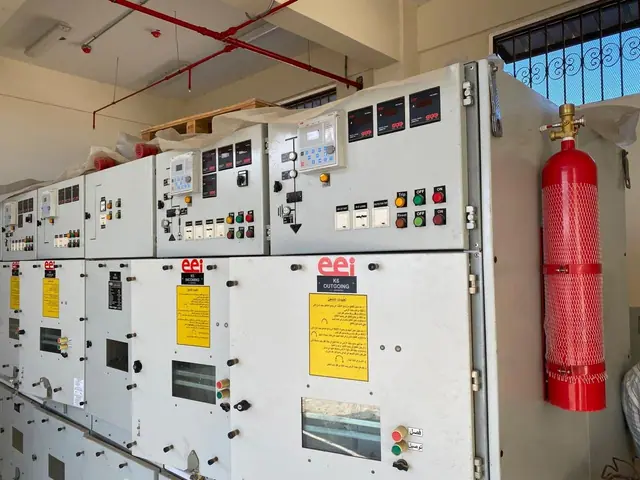
CO2 is more common on industrial hazards such as generator enclosures, printing presses, paint and flammable liquid processes, and machinery spaces. For guidance on switchgear and panels, see our article on electrical room fire protection.
What makes a gas system work on the day
A gas system is only as good as the room around it. These details deserve attention during design and handover:
- Room integrity. Every opening must be sealed or designed for. A door fan test is the usual way to check that the room will hold the gas.
- Agent quantity. This is calculated from the room volume, the fuel type and design concentration, the temperature and the altitude.
- Pipework and nozzles. Pipe sizes and nozzle layout must follow flow calculations so that the gas arrives quickly and evenly.
- Pressure relief. The room structure must cope with the pressure change during discharge.
- Cylinder location. Cylinders need a secure place, access for inspection, and a temperature within the manufacturer’s stated range. In an Egyptian summer, direct sun on an outdoor cylinder bank is a real concern.
- Post-discharge ventilation. Plan how to clear the room safely before anyone goes back in.
Maintenance and room changes
Gas systems can sit idle for years, so problems stay hidden until they are tested. Routine work includes checking cylinder weight or pressure, testing detection and release circuits, and following NFPA 2001 or NFPA 12 along with the manufacturer’s manual. Our fire system maintenance checklist covers the wider routine.
Watch for room changes too. A new cable penetration or a room extension can undermine a system that passed its original test. Exact requirements depend on the approved design and the local Civil Defense authority.
Choosing the right system for your facility
ECCO designs, supplies and installs fire protection systems for facilities across Egypt. If you are protecting a server room, control room or industrial hazard, talk to our engineers about which gas suppression option suits your space.
Frequently asked questions
What is the difference between clean agent and CO2 suppression?
Clean agents under NFPA 2001 are chosen for sensitive spaces and can be designed for occupied rooms. CO2 under NFPA 12 is effective on industrial hazards but is dangerous to people at extinguishing concentrations.
Is a gas suppression system safe for people?
Clean agent systems are designed within limits for occupied spaces, but everyone should still leave when the alarm sounds, because fire and smoke are hazardous. CO2 can be lethal at design concentrations and needs strict safeguards.
Why is a room integrity test needed?
The gas must stay in the room long enough to keep the fire out. A door fan test checks for leaks, so that gaps around doors, cables and ducts do not let the gas escape too early.
Can a gas system replace sprinklers?
Not automatically. Gas protects a defined enclosure, while the wider building may still need sprinklers. What is required depends on the approved design and the local Civil Defense authority.