There is no single best fire protection system. Most facilities need a combination: a way to detect a fire and warn people, a way to control or extinguish it, a dependable water or agent supply, and a building that slows the spread of fire and smoke. The right combination depends on how the building is used, what it contains, and what the approved design and Civil Defense require.
This guide explains the main system types, what each one does well, and how owners, consultants and contractors in Egypt can approach the choice.
The main types of fire protection systems
Fire detection and alarm systems
A fire alarm system gives the earliest warning. Detectors and manual call points report to a control panel, which then sounds alarms and can trigger other actions, such as shutting down air handling units or releasing a suppression system. Design and installation commonly follow NFPA 72 or the EN 54 series for equipment.
Alarm systems do not put out fires. They buy time for evacuation and first response, which makes them a foundation for almost every facility. For the main design choice, see our comparison of conventional and addressable fire alarm systems.
Sprinkler systems
Sprinklers are fixed networks of pipework and heat-activated heads that discharge water over the area where the fire is burning. In a standard system, only the heads exposed to enough heat open, so the rest of the building stays dry. Sprinkler design is covered by NFPA 13. The main variants are wet pipe, dry pipe, pre-action and deluge systems, and the right one depends on the hazard and the environment.
Hose and standpipe systems
Hose reels, landing valves and standpipes give trained staff and firefighters a water supply inside the building. NFPA 14 covers standpipe and hose systems. They are often installed together with sprinklers and share the same water supply, but they depend on people to operate them.
Fire pumps and water supply
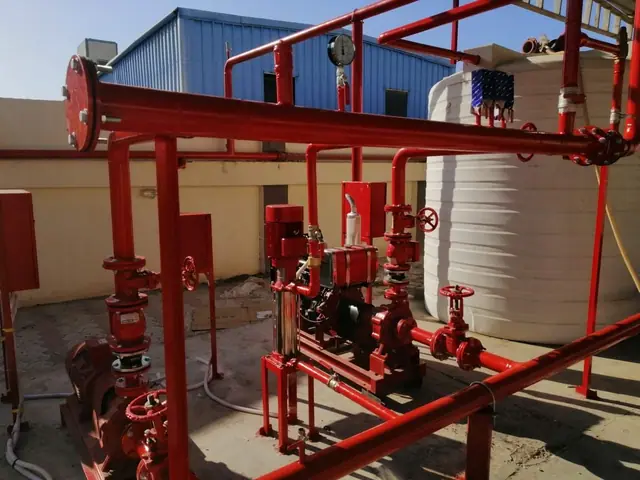
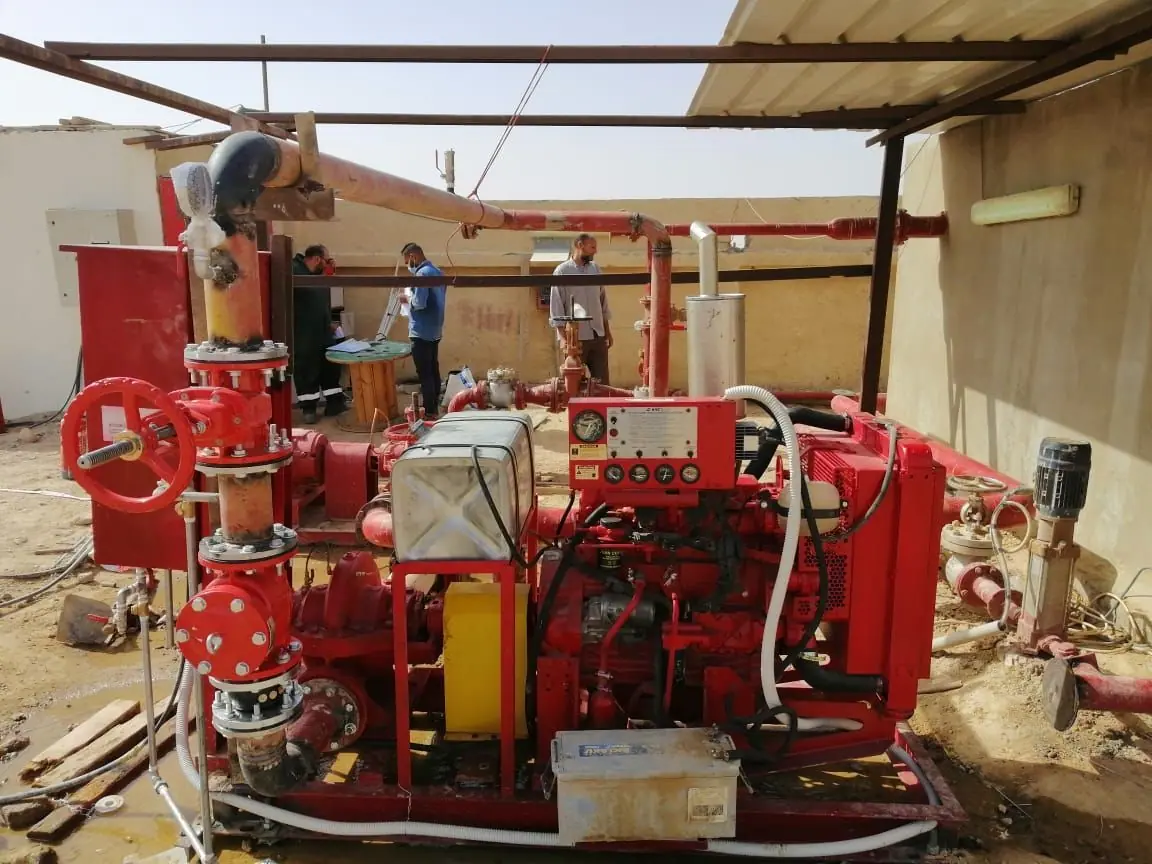
Every water-based system is only as good as its supply. A fire pump set and a dedicated water tank provide the flow and pressure the design requires. Fire pumps are installed under NFPA 20. Our fire pump guide explains how electric, diesel and jockey pumps work together.
Gas suppression and special hazard systems
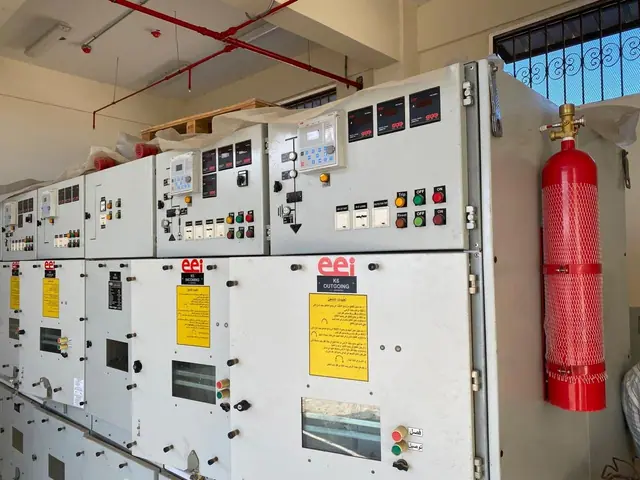
Where water would cause unacceptable damage, a room can be protected by a gas system. Clean agent systems fall under NFPA 2001, and carbon dioxide systems fall under NFPA 12. Typical applications include server rooms, control rooms, electrical rooms and archives. These systems rely on a reasonably sealed room, and carbon dioxide in particular needs strict safeguards because it is dangerous to people.
Portable fire extinguishers
Extinguishers deal with small fires in their early stage, provided someone trained is nearby. NFPA 10 covers their selection, placement and upkeep. They support fixed systems and do not replace them where fixed systems are required.
Passive fire protection
Fire-rated walls, doors, shafts and sealed penetrations limit how far fire and smoke can travel. Passive protection works without power, water or people, and it protects the escape routes that the other systems depend on.
Comparing the systems at a glance
| System | Main job | Typical applications | Key limitation |
|---|---|---|---|
| Fire alarm | Detect and warn | Almost all occupied buildings | Does not extinguish a fire |
| Sprinklers | Control or suppress automatically | Factories, warehouses, commercial buildings | Water can damage sensitive contents |
| Hose systems | Manual firefighting with water | Multi-storey and large buildings | Requires trained people |
| Gas suppression | Extinguish in an enclosed room | Server, control and electrical rooms | Needs a sealed room and safe evacuation |
| Fire extinguishers | Tackle small fires early | All facilities | Limited capacity and reach |
| Passive protection | Contain fire and smoke | All buildings | Fails if openings are left unsealed |
How to choose the right system for your facility
Start with the risk, not the equipment. These are the questions that shape most designs:
- How is the building used? A hospital, a hotel, a factory and a warehouse carry very different risks to people.
- What can burn, and how fast? Stored goods, packaging, flammable liquids and process materials all change the hazard.
- What would water damage? Sensitive electronics, records or high-value stock may call for gas suppression in specific rooms.
- Is anyone on site at all times? Unattended areas depend more heavily on automatic detection and suppression.
- What supply is available? Water storage, pump room space and the reliability of electrical power affect the design.
- What must be kept running? For a production line or a data room, downtime can matter as much as the fire damage itself.
- What does the authority require? The Egyptian fire code and Civil Defense requirements set the baseline for approval. Our article on Civil Defense requirements in Egypt covers this in more detail.
Common combinations by facility type
These are general patterns, not rules. The exact requirements depend on the approved design and the local authority.
- Factories and warehouses: fire alarm, sprinklers, hose systems, a fire pump set with a dedicated tank, and extinguishers matched to each area.
- Offices and commercial buildings: fire alarm, sprinklers where required, hose systems and extinguishers.
- Data and control rooms: detection tied to gas suppression, within a building that has its own general protection.
- Small shops and workshops: a smaller alarm system and suitable extinguishers may be enough, subject to approval.
Mistakes to avoid
- Buying equipment before there is an approved design.
- Choosing a system for its price alone, without checking that it suits the hazard.
- Treating a change of use as a minor matter, when new contents or processes can make the original design inadequate.
- Forgetting maintenance. A system that is not inspected and tested may not work when it is needed.
From risk assessment to handover
A sound project usually follows clear steps, and skipping one tends to lead to costly changes later:
- Gather information. Define the use, area, height and contents of the building, and collect the architectural drawings.
- Survey and assess the risks. Review the site in person, and identify special hazards and the available water and power.
- Design. Prepare drawings, hydraulic calculations and equipment selections to the applicable standards.
- Review and approval. Submit the design to the relevant authority and obtain approval before work starts.
- Install and test. Build to the approved drawings, then test each system before handover.
- Operate and maintain. Train staff, hand over the documents and set a schedule of periodic inspections.
How ECCO can help
ECCO designs, supplies, installs and maintains fire fighting and fire alarm systems for facilities across Egypt. You can review our services to see how we support a project from the first survey to long-term maintenance.
Get advice for your facility
If you are planning a new facility or reviewing an existing one, contact our engineers. Tell us about the site, how it is used and what approvals you need, and we will recommend a suitable system.
Frequently asked questions
What are the main types of fire protection systems?
The main types are fire detection and alarm systems, water-based systems such as sprinklers and hose systems, special hazard systems such as gas suppression, portable fire extinguishers, and passive protection built into the structure.
Does every building need a sprinkler system?
No. Whether sprinklers are required depends on the occupancy, size, height and hazard of the building. The approved design and the requirements of Civil Defense determine what applies to a specific facility.
Can gas suppression replace sprinklers?
Gas suppression is usually applied to specific enclosed rooms, such as server or control rooms, where water would cause serious damage. It is not a general replacement for building-wide protection, and any substitution must be accepted in the approved design.
Who decides which fire system a facility needs?
A qualified fire protection engineer proposes the design based on the risks and the applicable codes, and the design is then reviewed by the relevant authority. In Egypt, Civil Defense has the final say on what is accepted for a given site.