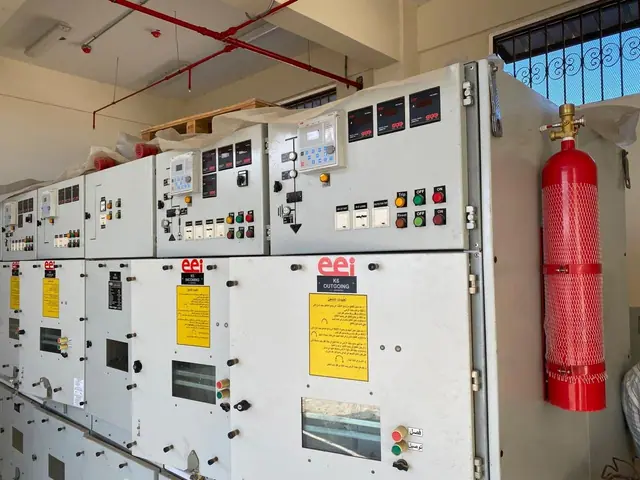
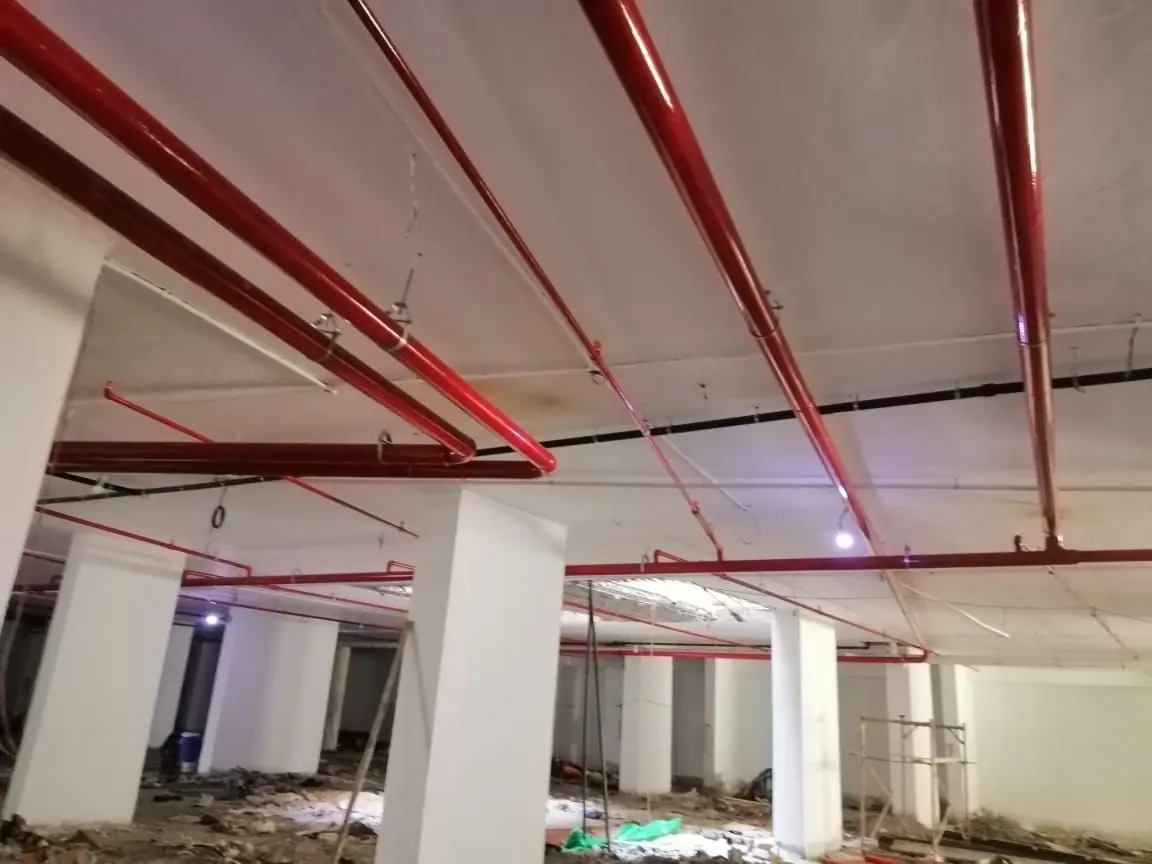
There are four main types of automatic sprinkler system: wet, dry, pre-action and deluge. For most buildings, a wet system is the right default because it is simple, quick to respond and has the fewest parts to fail. The other three are chosen only when a site has a specific reason, such as freezing temperatures, equipment that cannot tolerate accidental water, or a hazard that can spread very fast.
NFPA 13 is the standard most widely used for designing and installing sprinkler systems. Exact requirements depend on the approved design and the local Civil Defense authority.
How automatic sprinklers work
Each closed sprinkler head is held shut by a heat-sensitive glass bulb or fusible link. When the air around the head gets hot enough, that element breaks or melts and the head opens. Only the heads heated by the fire operate, not every head in the building. This is the most common misunderstanding about sprinklers, and it explains why water damage from a sprinkler is usually far less than people expect.
The four types of sprinkler system
Wet pipe systems
The pipes are always full of water under pressure. When a head opens, water discharges immediately. A flow switch or alarm valve signals the alarm, and the fire pump starts if the pressure falls far enough.
Wet systems suit offices, hotels, hospitals, shopping centers, car parks and most factories. Their one main limitation is temperature, since water in the pipes must not freeze. In Egypt that rarely matters outside refrigerated spaces.
Dry pipe systems
The pipes are filled with pressurized air or nitrogen instead of water. A dry pipe valve holds the water back at the riser. When a head opens, the air escapes, the pressure falls, the valve trips and water travels through the pipes to the open head.
Dry systems are used where pipes could freeze, such as cold stores and refrigerated warehouses. The trade-off is a delay before water arrives, plus more equipment to maintain.
Pre-action systems
Pipes are normally dry, and a pre-action valve stays closed until a separate detection system confirms a fire. There are two common arrangements:
- Single interlock. Detection opens the valve and water fills the pipes, but water discharges only once a head opens from heat.
- Double interlock. The valve opens only when both detection operates and a head opens, which further reduces the risk of water in the pipes by accident.
Pre-action suits spaces where accidental water would be very costly, such as data rooms, archives, museums and sensitive electrical areas.
Deluge systems
All heads or nozzles are open, and the pipes are normally empty. When the detection system or a manual release operates the deluge valve, water flows from every head on that valve at once, wetting the entire area.
Deluge is used on high hazards where a fire can spread faster than individual heads could open, such as fuel handling areas, transformers and some chemical processes.
Sprinkler system comparison
| Type | Pipes normally contain | What releases water | Speed | Typical use |
|---|---|---|---|---|
| Wet | Water | Head opens from heat | Immediate | Most buildings and factories |
| Dry | Pressurized air or nitrogen | Head opens, valve trips | Short delay | Cold stores, freezing areas |
| Pre-action | Air, or empty | Detection, then head opens | Short delay | Data rooms, archives, museums |
| Deluge | Empty, with open heads | Detection or manual release | Fast, all heads together | Fuel, transformers, high hazards |
How to choose the right type
Work through these questions with your designer:
- Can the pipes freeze? If yes, consider dry or pre-action. If no, start from wet.
- What would accidental water cost you? If the answer is a serious loss, consider pre-action, or look at gas suppression for enclosed rooms.
- How fast could a fire spread? If it would outrun individual heads, consider deluge.
- Can the site maintain it? Dry, pre-action and deluge systems add valves, detection and air supplies that must be tested regularly.
- What does the approved design call for? The final choice has to fit the building and the authority’s review.
If none of the first three questions raises a concern, a wet system is almost always the sensible answer.
Hazard classification and design basis
NFPA 13 sorts occupancies by how much fire they can produce, and this classification drives the head spacing, water density and total water demand.
- Light hazard. Low fuel load, such as offices and hotel rooms.
- Ordinary hazard. Moderate fuel load, such as car parks and many manufacturing areas.
- Extra hazard. High fuel load or flammable liquids.
- Storage. Treated separately, because the commodity, the storage height and the rack layout all change the design.
High-piled warehouses often need specific storage sprinklers, such as ESFR heads, or in-rack sprinklers. A design for one type of stock at one height may not protect a different stock stored higher, so tell your designer about any planned change.
What supports the sprinklers
A sprinkler network is only part of the system. It relies on:
- A control valve assembly at each riser or zone, with a flow switch, gauges, and drain and test connections
- A reliable water supply, normally a dedicated tank sized by calculation
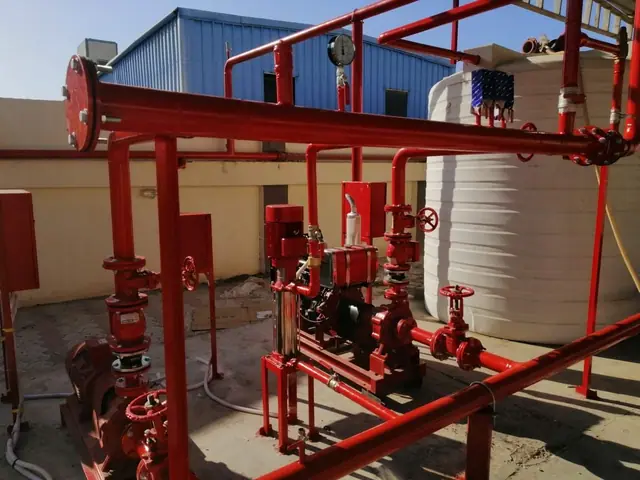
- A fire pump set to provide the required flow and pressure
- A link to the fire alarm panel so that any flow raises an alarm
Our fire pump guide and fire water tank sizing article cover the supply side in more detail. Many buildings also combine sprinklers with hose cabinets designed to NFPA 14.
Common mistakes to avoid
- Painting over heads or fitting them with covers not approved for that head
- Stacking goods too close to the heads
- Adding partitions or ceilings without reviewing the layout
- Leaving a control valve closed after maintenance
- Using a head with the wrong temperature rating near a heat source
- Skipping inspection and testing under NFPA 25
Get the right sprinkler system for your building
ECCO designs, supplies and installs fire fighting systems across Egypt, from hydraulic calculations through to testing and handover. See our services, or contact our engineers with your drawings and we will recommend the right system.
Frequently asked questions
Do all sprinklers go off at once in a fire?
No, not in wet, dry or pre-action systems. Each head reacts to heat at its own location, so usually only the heads near the fire open. Deluge systems are the exception, since all their heads are open.
Which sprinkler system is most common?
The wet pipe system is the most common choice for ordinary buildings because it is simple, responds quickly and needs the least equipment. Other types are chosen when a site has a specific reason.
What is the difference between pre-action and deluge?
Both use detection to open a valve. A pre-action system still has closed heads, so water leaves only at a head opened by heat. A deluge system has open heads, so water flows from every head on that valve.
Are sprinklers required in my building in Egypt?
That depends on the building's use, height and area under the Egyptian fire code. Confirm the requirement with your designer and the local Civil Defense authority.